
Why Short Cycling AC is a BIG Problem
Imagine it’s the middle of July in Tampa Bay. It’s 95°F outside, your thermostat is set to 74°, and your air conditioner keeps turning on for a few minutes, shutting off, then starting again almost immediately.
At first, it doesn’t seem like a major problem. After all, the system is still running.
But as the day goes on, your home begins to feel warm and sticky, your air conditioner seems to work harder than ever, and you start wondering why your electric bill keeps climbing.
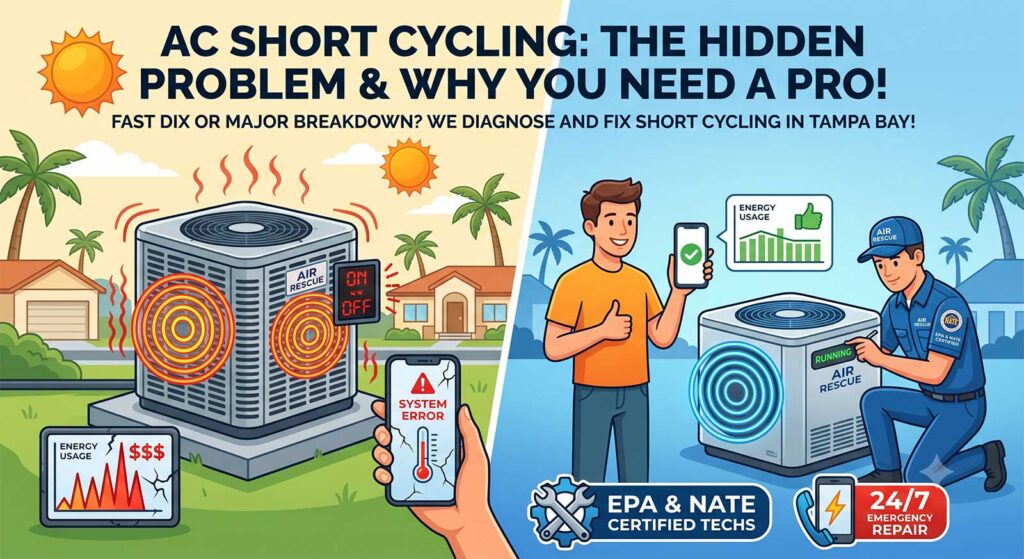
This rapid starting and stopping is called short cycling, and it’s one of the most common and potentially expensive air conditioning problems Florida homeowners face.
Unlike a complete breakdown, short cycling is an early warning sign that something isn’t right. Left unresolved, it can increase energy costs, reduce indoor comfort, and place tremendous stress on your compressor, the heart of your air conditioning system.
💡 Did You Know?
Your air conditioner uses significantly more electricity during startup than it does while running normally.
Every time the compressor starts, it draws a surge of electrical current. When a system short cycles several extra times each hour, those repeated startups waste energy while placing additional strain on electrical components.
In Florida, where air conditioners may run for much of the year, frequent short cycling can noticeably increase monthly cooling costs while shortening the life of your equipment.
What Is AC Short Cycling?
A properly operating air conditioner should run long enough to cool your home evenly while also removing excess humidity from the indoor air.
During a typical Florida summer day, many systems run cooling cycles lasting approximately 15 to 20 minutes, although cycle length varies depending on outdoor temperatures, humidity, thermostat settings, and your home’s insulation.
When an air conditioner short cycles, it shuts off before completing a normal cooling cycle and restarts only a few minutes later.
The result isn’t just less efficient cooling; it’s a system that’s constantly working harder than necessary.
Why Short Cycling Is Such a Big Problem in Florida
Unlike homeowners in cooler climates, Tampa Bay residents depend on their air conditioners for both cooling and dehumidification. Long cooling cycles don’t just lower the temperature. They also remove moisture from the air.
When short cycling interrupts that process, several problems begin to develop.
Higher Electric Bills
Starting your air conditioner requires the most electrical power. Every unnecessary startup wastes electricity without delivering much cooling.
Instead of running steadily and efficiently, your system repeatedly enters its highest-energy operating phase. Over time, those extra starts can significantly increase monthly utility costs.
Excessive Wear on the Compressor
The compressor is often the most expensive component inside an air conditioning system. Each startup creates heat, pressure, and mechanical stress.
When short cycling forces the compressor to start dozens of additional times each day, wear accumulates much faster than normal.
Ignoring short cycling today could eventually lead to a major compressor repair—or even premature system replacement.
Poor Humidity Control
Many homeowners assume their air conditioner exists only to cool the air. In Florida, removing humidity is equally important.
An oversized or malfunctioning air conditioner may satisfy the thermostat before it has enough time to remove moisture from your home.
The result? Your thermostat says 74°, but your house still feels damp, sticky, and uncomfortable.
Reduced Indoor Air Quality
High indoor humidity creates favorable conditions for mold, mildew, and dust mites. Closets, bathrooms, laundry rooms, and other low-airflow areas often become the first places where excess moisture becomes noticeable.
Long, consistent cooling cycles help remove moisture before it has the opportunity to create comfort or indoor air quality problems.
Five Common Causes of Short Cycling
1. Dirty Air Filter
This is one of the simplest and most common causes of short cycling.
When the air filter becomes clogged with dust, pet hair, or debris, airflow across the evaporator coil becomes restricted. The coil may become too cold and begin freezing over, causing built-in safety controls to shut the system down.
Fortunately, replacing your air filter every 30 to 60 days often prevents this problem.
2. Refrigerant Leak
Many homeowners believe refrigerant naturally runs low over time.
It doesn’t. Your air conditioner is a sealed system.
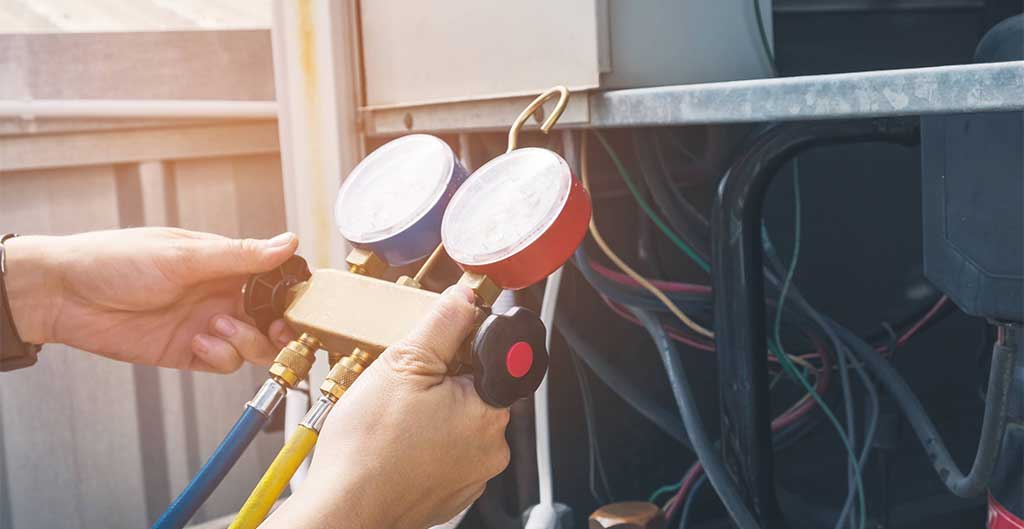
If refrigerant is low, there is almost always a leak somewhere in the system. Low refrigerant pressures can activate safety switches that repeatedly shut the system off before normal cooling cycles are completed.
Finding and repairing refrigerant leaks requires specialized equipment and EPA-certified technicians.
3. Electrical Component Problems
Failing capacitors, contactors, relays, loose electrical connections, or damaged control boards can interrupt the normal operation of your system.
Florida’s frequent lightning storms and power surges make electrical problems more common than many homeowners realize.
Professional testing helps identify which component has actually failed before unnecessary parts are replaced.
4. Dirty Outdoor Condenser Coil
Your outdoor unit releases heat collected from inside your home.
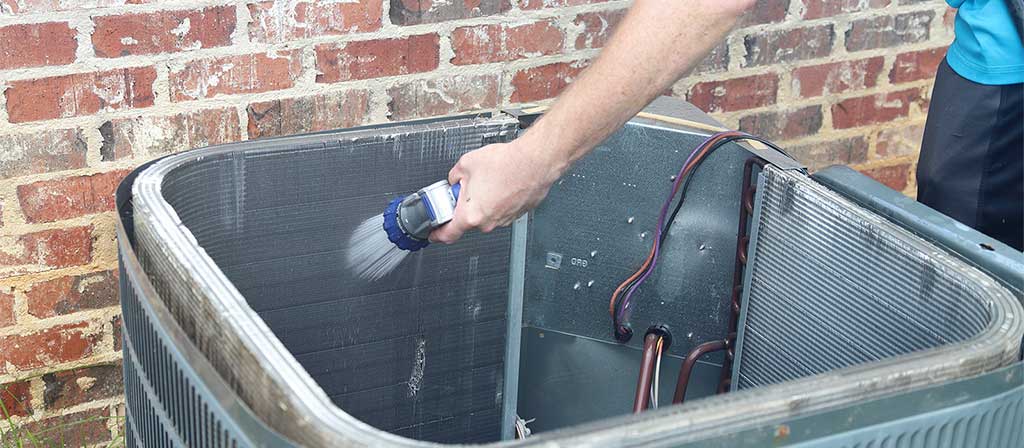
When the condenser coil becomes coated with dirt, grass clippings, pollen, or other debris, it struggles to release that heat efficiently.
As operating temperatures rise, built-in safety controls may shut the system down to protect the compressor.
Regular professional maintenance helps keep condenser coils clean and operating efficiently.
5. An Oversized Air Conditioner
Surprisingly, bigger isn’t always better. Many homeowners assume a larger air conditioner will cool their home faster. While that’s technically true, an oversized system often shuts off before removing enough humidity from the air. ENERGY STAR also emphasizes that properly sized heating and cooling equipment is essential for comfort, humidity control, and energy efficiency.
An oversized system cools the thermostat location so quickly that it shuts off before removing enough humidity from the rest of the home. The system then starts again only a few minutes later.
This constant stopping and starting creates:
Installing an oversized unit is a common issue that causes rapid short cycling and prevents your system from reaching peak operating efficiency, as detailed in ENERGY STAR’s right-sizing guidelines.
A properly sized air conditioner may actually run longer during hot Florida afternoons and that’s usually a good thing. Longer cooling cycles improve comfort, reduce humidity, and allow the system to operate more efficiently.
💡 Did You Know?
Did you know? ENERGY STAR emphasizes that proper HVAC sizing is essential for maintaining comfort, controlling humidity, and maximizing energy efficiency. An oversized system may cool quickly but often performs poorly in humid climates like Florida.
6. Thermostat Problems
Your thermostat acts as the brain of your HVAC system. If it isn’t reading the temperature correctly or communicating properly with your air conditioner, it can cause the system to start and stop more often than it should.
Common thermostat-related issues include:
For example, if the thermostat briefly loses power because of weak batteries or a loose electrical connection, it may interrupt the cooling cycle and cause the system to restart repeatedly.
Fortunately, replacing thermostat batteries is one of the easiest maintenance tasks homeowners can safely perform. If the problem continues after installing fresh batteries and confirming the settings are correct, the thermostat or its wiring should be inspected by a qualified HVAC technician.
A Real Tampa Bay Example
family in Clearwater contacted Air Rescue because their three-year-old air conditioner was turning on and off every four minutes. Their home never felt comfortable, and another contractor had already recommended replacing the entire system.
After performing a complete diagnostic evaluation, our technician discovered the problem wasn’t a failing air conditioner at all.
The air filter had become heavily clogged with pet hair, restricting airflow enough to freeze the evaporator coil. As the coil froze, the system’s safety controls repeatedly shut the unit down, creating the appearance of a much larger mechanical failure.
After replacing the filter, cleaning the evaporator coil, and restoring proper airflow, the system returned to normal operation.
Instead of purchasing an unnecessary replacement system, the homeowners were able to continue using equipment that still had years of service life remaining.
This is why professional diagnosis is so important. Many different HVAC problems produce nearly identical symptoms, and replacing equipment before identifying the root cause can cost homeowners thousands of dollars unnecessarily.
What Homeowners Can Safely Check
Before scheduling service, there are two simple things every homeowner can safely inspect.
If your system continues turning on and off every few minutes after these basic checks, it’s best to turn the system off and schedule a professional inspection.
Continuing to operate a short-cycling air conditioner can increase wear on the compressor and other major components.
Don’t Ignore Short Cycling
Short cycling is your air conditioner’s way of telling you something isn’t right.
Whether the problem is a clogged air filter, a refrigerant leak, failing electrical components, dirty condenser coils, or an oversized system, identifying the cause early can prevent expensive repairs and help restore reliable comfort.
Since 1946, homeowners across Hillsborough, Pinellas, Pasco, and Polk Counties have trusted Air Rescue Air Conditioning to diagnose HVAC system accurately and recommend AC repair strategy based on what’s best for the homeowner; not simply the most expensive repair.
If your air conditioner keeps turning on and off every few minutes, don’t wait until a small problem becomes a major breakdown.
Schedule professional AC repair with Air Rescue today. Our NATE-certified technicians will identify the root cause, explain your options clearly, and restore your system to smooth, efficient operation backed by our promise: “We’re There When We Say, or You Don’t Pay.“
SHORT CYCLING AC FAQs
GBP Blurb #1 – The Warning Signs Angle (Tampa)
Does your AC keep turning on and off every few minutes?
That’s called short cycling, and it’s more than just an annoyance. It can increase your electric bill, reduce your home’s comfort, and put extra strain on your compressor—the most expensive part of your AC system.
Our latest blog explains the most common causes of short cycling, what you can safely check yourself, and when it’s time to call a professional.
👉 Read the full article on our website.
GBP Blurb #2 – The Humidity Angle (Clearwater/St. Petersburg)
Your home feels cool… but still sticky?
Your air conditioner may be short cycling. When an AC shuts off too quickly, it doesn’t have enough time to remove Florida’s humidity, leaving your home damp and uncomfortable while wasting energy.
Learn why short cycling happens, how it affects your system, and what you can do before it leads to costly repairs.
📖 Read our newest blog today!
GBP Blurb #3 – The Cost-Saving Angle (Brandon/Lakeland or Third Location)
A small AC problem can turn into a big repair bill.
If your air conditioner starts and stops every few minutes, don’t ignore it. Short cycling can shorten the life of your compressor, increase energy costs, and signal issues like a clogged filter, dirty coils, refrigerant leaks, or even an oversized AC system.
Our latest blog explains the warning signs and how early diagnosis can help you avoid expensive repairs.
👉 Learn more on the Air Rescue website.