
Common HVAC Problems & How to Solve Them: A Tampa Bay Homeowner’s Guide to HVAC Repair
In Tampa Bay, from humid St. Petersburg neighborhoods to homes across Hillsborough, Pasco, and Polk Counties, air conditioning isn’t optional. It’s essential. When your system fails during a Florida heatwave, even a minor issue can escalate fast.
At Air Rescue Air Conditioning, we’ve spent more than 70 years responding to common HVAC problems in Tampa homes. When you search for reliable HVAC repair, you need clear answers, not scare tactics. Learn more about our history and commitment to Florida homeowners on our About Us page.
This guide explains the most frequent HVAC issues we see in Tampa Bay, when a simple DIY step may solve the problem, and when professional service is required.
The Florida “Big Three”: Common HVAC Problems in Tampa Bay
Many cooling issues in Florida are caused by our unique environment — high humidity, heavy rainfall, and intense electrical storms.
1. Clogged Condensate Drain Lines (The “Tampa Special”)
Because Tampa’s air is extremely humid, your AC removes gallons of moisture daily. Over time, algae and debris accumulate in the drain line.
Symptoms:
- AC shuts off unexpectedly
- Water is pooling near the air handler
- The system won’t restart
Cause:
Modern systems use a float switch that shuts down the unit if the drain line clogs to prevent water damage.
Possible DIY Step:
A wet/dry shop vac may clear minor blockages.
Professional Fix:
A licensed technician can flush, treat, and prevent future buildup during routine maintenance. If your system won’t restart, schedule professional AC repair in Tampa Bay to prevent further damage.
This is one of the most common HVAC problems in Tampa homes, and one of the most preventable.
2. Frozen Evaporator Coils
It sounds strange in 95-degree weather, but frozen coils are common in Florida.
Symptoms:
- Ice on copper refrigerant lines
- Warm air from vents
- Reduced airflow
Causes:
- Dirty air filter
- Restricted airflow
- Low refrigerant from a leak
Immediate Action:
Turn the system OFF and let it thaw completely.
If the issue returns after replacing the filter, you may have a refrigerant issue. Under EPA Section 608 regulations, only certified professionals can handle refrigerants.
3. Electrical Failures & Capacitor Issues
Florida leads the country in lightning strikes. Combined with constant heat cycles, electrical components take a beating.
Symptoms:
- Clicking or buzzing sounds
- Outdoor fan spins but no cooling
- System won’t start
Common Causes:
- Failed capacitor
- Burned contactor
- Electrical surge damage
These are high-voltage components. Professional HVAC repair is required for safety and code compliance. If you suspect electrical failure, don’t wait, request service through our contact page.
Deep Dive: AC Compressor Repair in Tampa Bay
The compressor is the heart of your cooling system. When it fails, cooling stops entirely.
Because AC compressor repair can be expensive, recognizing early warning signs matters.
Signs You May Need AC Compressor Repair
Sometimes what appears to be a failed compressor is actually a faulty capacitor or wiring issue — a much less expensive fix.
That’s why Air Rescue offers a FREE Second Opinion. If another company told you that you need a new compressor, use our Quote Comparison form and let us double-check before you commit to a major expense.
In some cases, an honest AC compressor fix can save thousands compared to full replacement.
The Pre-Call Checklist: What to Check Before Scheduling HVAC Repair
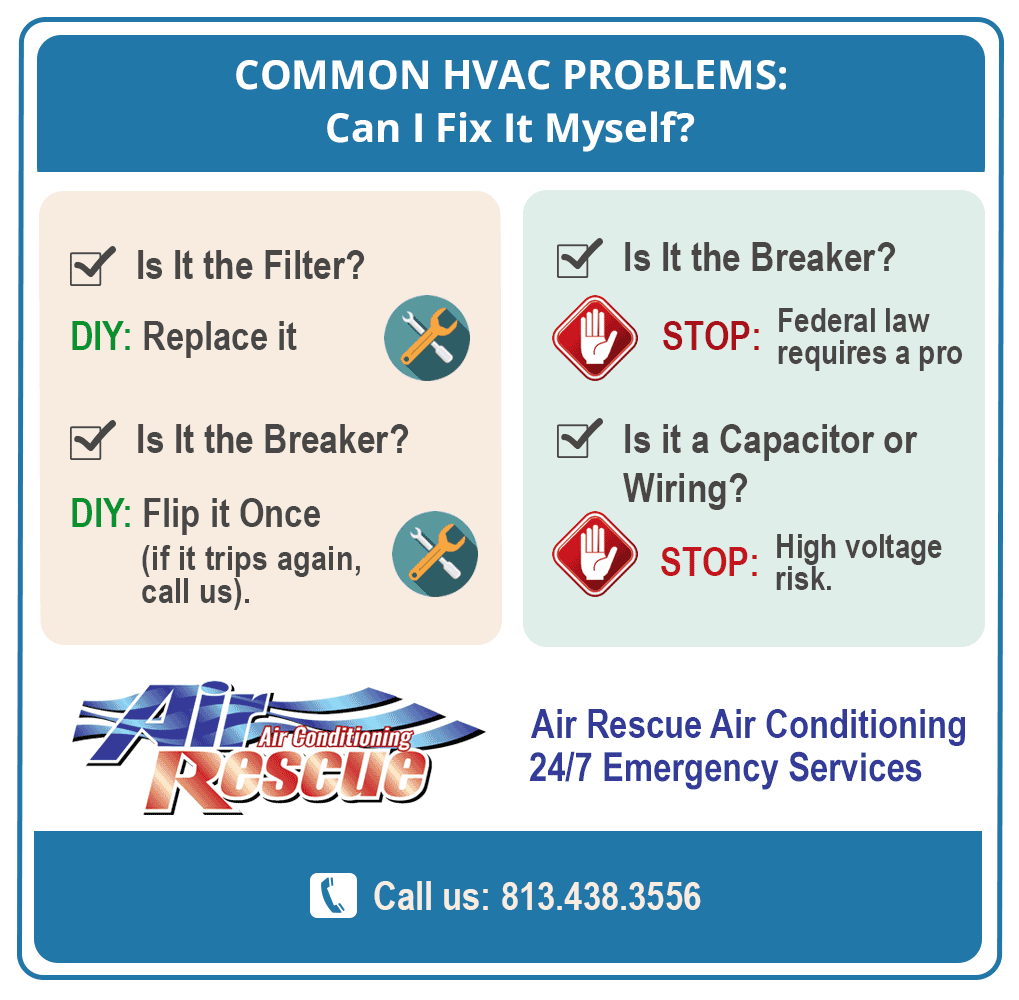
Before calling for service, try these simple steps:
Check the Thermostat
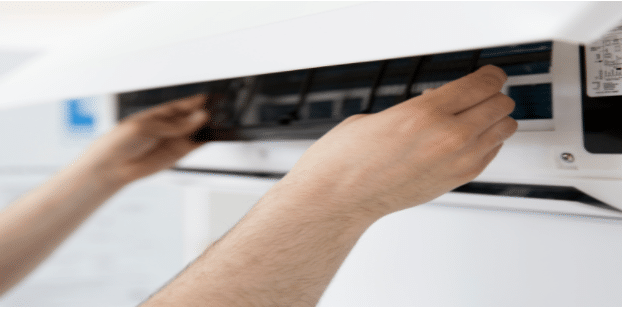
Inspect the Air Filter
A dirty filter is the #1 cause of airflow-related common HVAC problems.
Reset the Breaker (One Time Only)
If it trips again immediately, stop. Repeated resets can damage the system or create fire hazards.
If these steps don’t resolve the issue, it’s time to schedule professional AC repair services.
Preventing Common HVAC Problems Before They Start
Most common HVAC problems in Tampa are preventable with regular maintenance.
Our VIP Protection Plan helps catch:
Routine maintenance is far less expensive than emergency AC compressor repair during peak summer demand.
Why Tampa Bay Homeowners Trust Air Rescue
Since 1946, Air Rescue Air Conditioning has served Hillsborough, Pinellas, Pasco, and Polk Counties.
Don’t Let a Small Problem Become a Major Replacement
When searching for common HVAC problems in Tampa, accurate diagnosis matters.
Whether you need a simple fix or advanced AC compressor repair, Air Rescue is ready to respond.
Schedule service today through our contact page or request your FREE second opinion to get back to cool comfort quickly.
FAQ About HVAC Repair (DIY vs. Professional HVAC fix):